Subarachnoid Hemorrhage (SAH) – Recognising the emergency
The classic clinical presentation of aSAH* in an awake and alert patient is a headache that is sudden in onset and immediately reaches maximal intensity.1
If the patient meets the criteria for the Ottawa SAH** Rule it can serve as a method to screen out individuals with a low likelihood of aSAH*.1

Noncontrast head CT remains the mainstay of SAH** diagnosis:1
- If the headache occurred <6 hours and there are no new neurological deficits, a noncontrast head CT is recommended. If no SAH** is identified, additional work-up is determined by physician judgment.
- For patients presenting ≥6 hours or with a new neurological deficit, a noncontrast head CT is also performed.
-> If the noncontrast head CT reveals a SAH** diagnosis, further imaging such as CTA/DSA is indicated.

Lumbar Puncture:1
If the noncontrast head CT performed ≥6 hours after onset or in the presence of neurological deficits, does not show evidence of SAH**, a lumbar puncture for xanthochromia evaluation is recommended. Further imaging with CTA/DSA is indicated if the test is positive.

CT Angiography (CTA)/Digital Substraction Angiography (DSA):1
When subarachnoid hemorrhage is confirmed on noncontrast head CT or lumbar puncture, a CTA/DSA is the next diagnostic step to determine optimal treatment strategy.

For alert patients >15y of age with new severe nontraumatic headache reaching maximum intensity within 1 h. Patients require additional investigation for SAH if they meet any of the following criteria:
| 1 | Age ≥ 40 y |
| 2 | Neck pain or stiffness |
| 3 | Witnessed loss of consciousness |
| 4 | Onset during exertion |
| 5 | Thunderclap headache (instantly peaking pain) |
| 6 | Limited neck flexion on examination |
Table 3. Ottawa SAH Rule
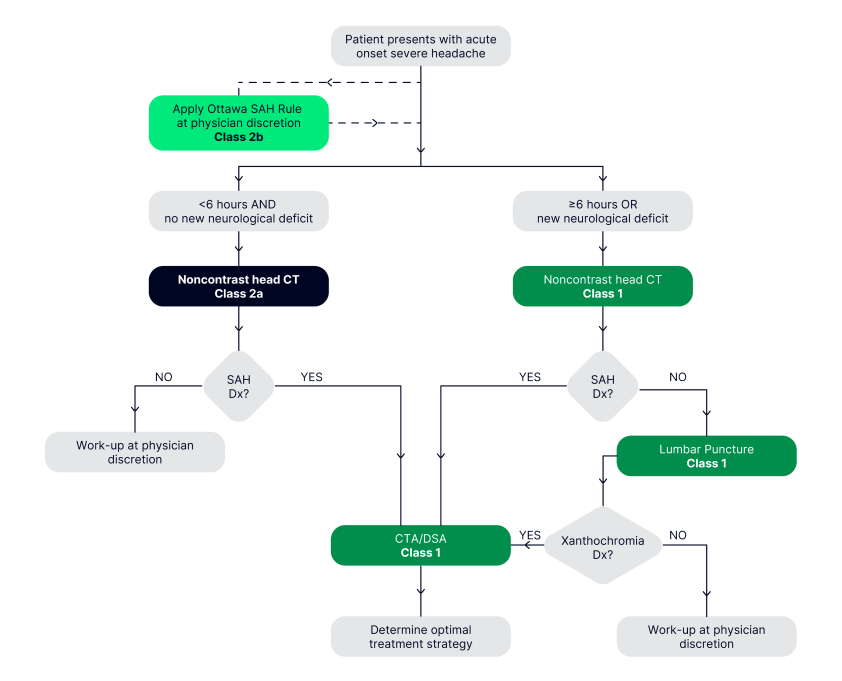
Table from AHA Guidelines 2023
* aSAH: Aneurysmal subarachnoid hemorrhage
** SAH: Subarachnoid hemorrhage
*** DCI: Delayed cerebral ischemia
- Hoh B. et al., AHA/ASA Guideline, 54:314-370, 2023

Access Professional Resources